Report flags India’s semiconductor demand rising in the AI era; push seen for custom silicon and memory-heavy chips
A report cited by ET Telecom suggests semiconductor demand in India could rise sharply by end-2026, driven by AI adoption and interest in custom silicon and memory-intensive chips. Downstream organisations surveyed expect higher demand for AI accelerators and ASICs, highlighting the scale of compute needs across industries.
- Reporting desk
- Health India Network News Desk
- First published
India’s appetite for semiconductors is expected to climb in the artificial intelligence (AI) era, with a research report highlighted by ET Telecom projecting that demand could reach about 28% by the end of 2026, close to the global expectation of 29%. The projection reflects how AI workloads—training, inference and data-heavy deployments—are increasing the need for both processing capability and high-performance memory.
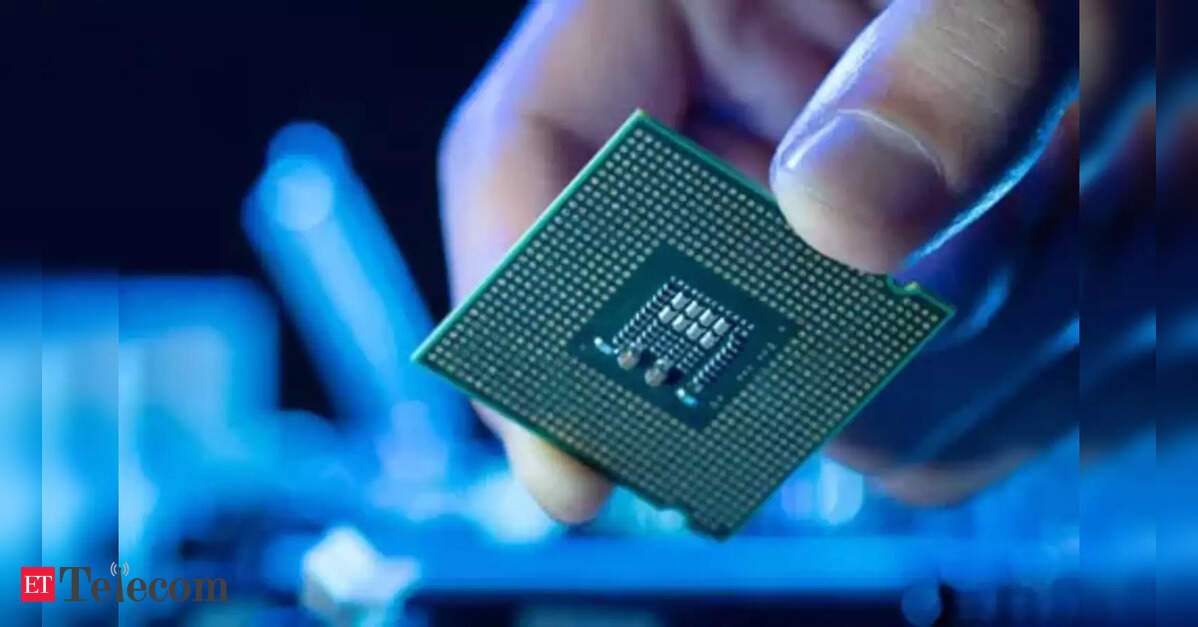
The report, attributed to Capgemini Research Institute findings, indicates downstream organisations in India are anticipating a rise in demand for AI acceleration chips, custom silicon (ASICs) and memory-intensive components. In practical terms, this points to a shift where companies are not only buying off-the-shelf compute but also exploring domain-specific hardware to optimise cost, performance and energy use.
Why this matters for India’s tech ecosystem
Rising semiconductor demand has implications across the value chain: data centres scaling for AI, device makers integrating on-device intelligence, and enterprise IT budgets prioritising compute upgrades. It also strengthens the strategic case for expanding domestic capability—whether in design, packaging, testing, or manufacturing—so that supply constraints and geopolitical shocks do not derail adoption.
Custom silicon momentum
A notable signal from the survey is the expected growth in interest for custom silicon. As AI applications become more specialised—vision, speech, recommendations, industrial automation—organisations increasingly weigh purpose-built chips to improve throughput and reduce per-task costs. If the trend holds, it could create more opportunities for India-based chip design talent and systems firms that integrate hardware with software stacks.
Industry watchers say the next two years will test whether India can convert demand growth into durable capability—by aligning skilling, infrastructure and investment—while companies simultaneously navigate a fast-evolving global semiconductor cycle.