MeitY secretary says India can become a global hub for AI applications; highlights critical tech supply chains and chip ambitions
MeitY Secretary S Krishnan said India could emerge as a global capital for AI applications, pointing to the country’s growing role in critical technology supply chains, expanding compute availability, and a large semiconductor design workforce that policymakers want to translate into Indian IP and products.
- Reporting desk
- Health India Network News Desk
- First published
New Delhi: India can position itself as a global capital for AI applications, Ministry of Electronics and Information Technology (MeitY) Secretary S Krishnan said, as the government and industry look to expand compute access, build domestic capabilities and play a larger role in critical technology supply chains.
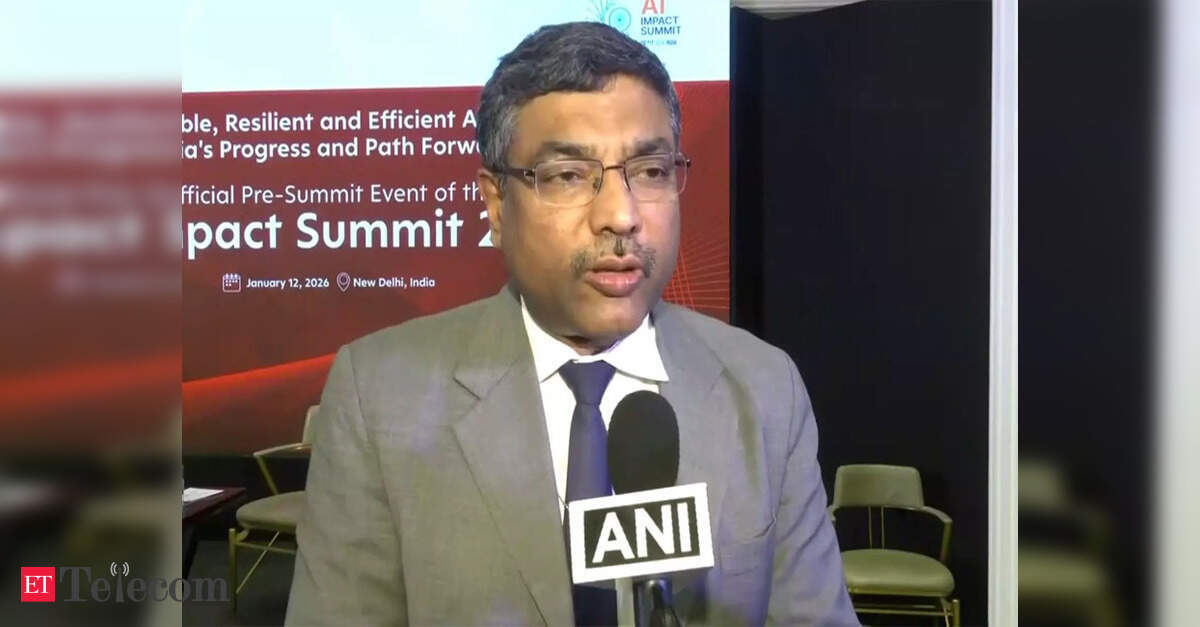
Speaking in remarks reported by ET Telecom, Krishnan pointed to India’s participation in critical minerals and supply-chain conversations as a sign that the country is increasingly being viewed as a trusted partner. He said these strategic initiatives matter for India because they influence the end-to-end technology stack—right from minerals and manufacturing inputs to computing infrastructure and advanced products.
He also underlined the role of private-sector investment in expanding compute capacity in India, arguing that when large platforms build infrastructure and deploy advanced capabilities, Indian innovators can build on top of that foundation and create impactful products and services. In this view, access to reliable compute and cloud infrastructure becomes a catalyst for startups and enterprises to ship AI applications at scale.
On the semiconductor front, Krishnan highlighted that a significant portion of the global semiconductor design workforce is based in India, much of it working in global capability centres. He said a key objective is to convert that talent base into Indian intellectual property—designing chips and turning those designs into products that can be manufactured and commercialised.
He indicated that facilities under the India Semiconductor Mission, including fabs and advanced packaging units, are receiving orders, and he presented exports as an important test of whether industrial policy is delivering competitiveness. In addition, he said the government is working on sovereign cloud capacity for AI for government use and certain restricted categories of users.
Taken together, the comments reflect a policy direction that links AI leadership to three building blocks: compute availability, trusted participation in strategic supply chains and a semiconductor roadmap that moves from design talent to deployable hardware—so that India is not only a major user of AI, but also a maker of critical technology.