ISRO details Ax-4 mission milestones: Shubhanshu Shukla completed seven India-led microgravity experiments
ISRO said India’s Ax-4 (Axiom-04) mission concluded with astronaut Shubhanshu Shukla returning after an 18-day stay aboard the ISS. The agency highlighted seven India-led experiments spanning muscle regeneration, algae, crop sprouts and cognitive performance—data expected to aid India’s human spaceflight roadmap.
- Reporting desk
- Health India Network News Desk
- First published
ISRO has outlined the scientific and operational milestones achieved during the Axiom-04 (Ax-4) mission, which concluded with the return of Indian astronaut Shubhanshu Shukla after an 18-day stay aboard the International Space Station. The agency said the mission—launched on June 25, 2025, aboard SpaceX’s Dragon spacecraft—was conducted in collaboration with international partners and produced a structured set of outcomes aimed at strengthening India’s human spaceflight readiness.
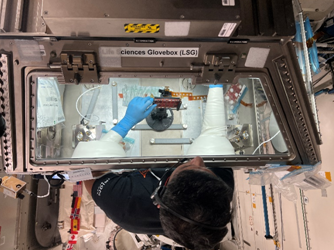
A key highlight, ISRO said, was the completion of seven microgravity experiments developed by Indian research institutions under the coordination of the Human Space Flight Centre (HSFC). The experiments focused on themes that matter both for long-duration spaceflight and for spin-off learning on Earth: muscle regeneration, growth and radiation response of edible algae, crop viability using sprouts such as methi and moong, microbial survivability, cognitive testing linked to electronic displays, and the behaviour of cyanobacteria in microgravity.
ISRO also noted that Shukla adapted well to the microgravity environment despite the physical and psychological challenges associated with spaceflight. The mission, the agency said, generated extensive documentation of life and work in orbit through photographs and video, alongside experiment logs and scientific samples to be analysed post-return.
The experiments are designed to provide evidence relevant to life-support systems, crew health and human factors—areas that become critical as missions extend in duration and complexity. These learnings are expected to inform India’s future astronaut training, payload planning and safety procedures as the country advances its human spaceflight ambitions.
While Ax-4 was a collaborative international effort, ISRO’s emphasis on India-led research is notable: it signals a shift from symbolic participation to structured science delivery. In practical terms, the data and operational exposure are positioned as inputs to India’s next steps in human spaceflight, including planning for longer missions and building confidence in microgravity research pipelines.
Sources and reporting record
- E-01ISROISRO