Election Commission launches ECINET to unify 40+ election apps, invites global EMBs to collaborate
The Election Commission of India launched ECINET, a unified digital platform intended to bring together more than 40 election-related applications and portals. Announced at the India International Conference on Democracy and Election Management, the initiative aims to streamline election administration and improve access to key services for stakeholders.
- Reporting desk
- Health India Network News Desk
- First published
A single window for election tech
India’s Election Commission has launched ECINET, describing it as a consolidated digital platform that integrates more than 40 election-related applications and portals. The move is intended to simplify workflows for election administration by reducing fragmentation across tools, logins and data sources—an issue that grows as digital governance expands and election management becomes more technology-intensive.
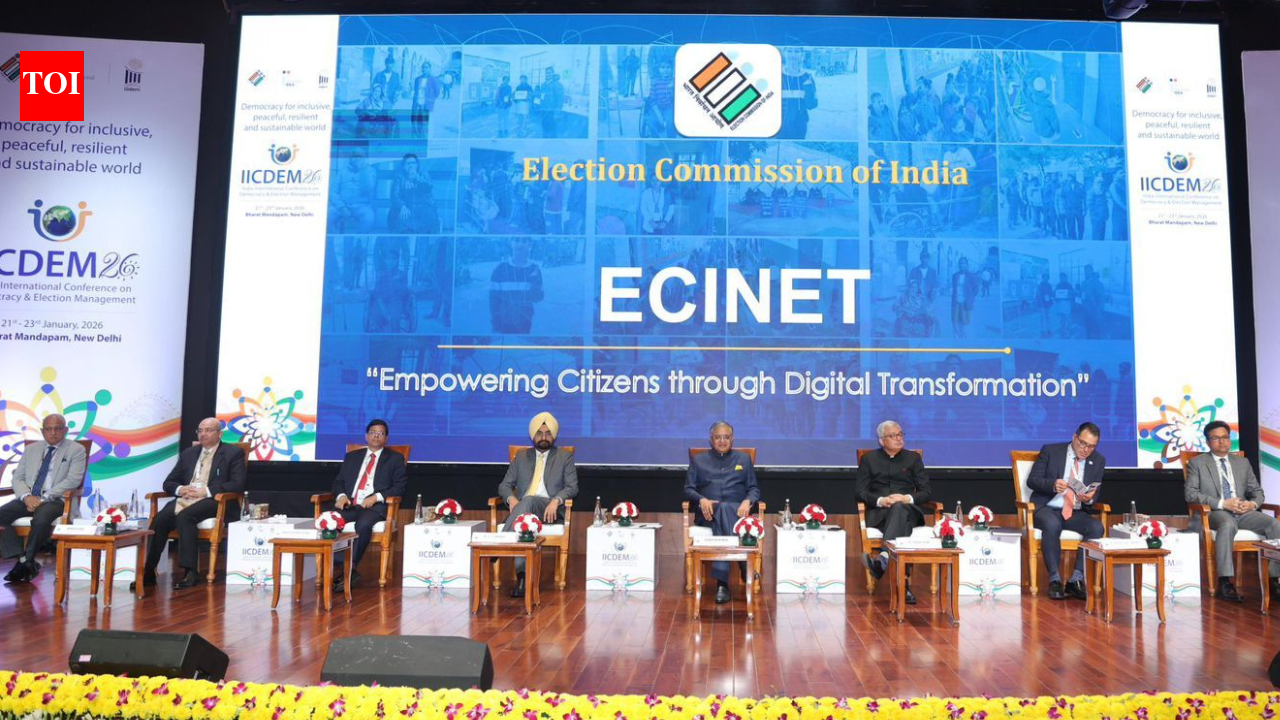
The announcement was made at the India International Conference on Democracy and Election Management (IICDEM), where election management bodies and officials typically discuss best practices, operational challenges and innovations in electoral processes. By launching ECINET in that setting, the Commission positioned the platform not only as a domestic administrative reform but also as a potential reference point for other democracies.
What ECINET is expected to change
Election processes involve multiple stakeholders—poll officials, returning officers, political parties, voters, observers and security agencies—each interacting with different digital systems for tasks such as training, notifications, service requests, grievance tracking, communication and reporting. A unified platform can potentially reduce duplication, improve data consistency and shorten response times, especially during high-pressure phases like nomination deadlines, polling days and counting.
The platform’s value will ultimately depend on implementation quality: how reliably it performs at scale, whether it supports field-level usage in low-connectivity environments, and how the Commission manages data protection and audit trails. In Indian elections, where the operational footprint is massive, even incremental efficiencies can be significant when multiplied across thousands of locations.
An invitation to global election bodies
Alongside the launch, the Election Commission invited election management bodies (EMBs) worldwide to collaborate and explore how similar unified systems could be created for their own contexts. The pitch was that the concept of integrating numerous election tools under one umbrella could strengthen election delivery, increase transparency and make it easier for citizens and stakeholders to find official services.
This outreach also reflects India’s long-standing practice of using IICDEM as a platform for election diplomacy—sharing operational learnings and demonstrating large-scale administrative capabilities. ECINET, if it delivers as intended, could become part of that narrative: digital infrastructure supporting a complex democracy.
Why it matters in 2026
Election integrity debates increasingly involve technology—systems must be accessible, resilient and secure against misuse or misinformation. A unified platform can make governance simpler, but it can also raise expectations around cybersecurity and transparency. ECINET’s rollout will likely be watched for how it balances ease of access with safeguards, and how quickly it becomes a dependable backbone rather than just another portal among many.