Tejashwi Yadav appointed RJD’s national working president at Patna meet
RJD leader Tejashwi Yadav has been named the party’s national working president at a national executive meeting in Patna, a move framed as a generational transition as the party recalibrates its organisational structure. The decision is seen as consolidating Tejashwi’s role in day-to-day leadership and strategy.
- Reporting desk
- Health India Network News Desk
- First published
A new role and a clearer chain of command
The Rashtriya Janata Dal (RJD) on Sunday (25 January 2026) appointed Tejashwi Yadav as its national working president at a key party meeting in Patna. The announcement, made in the presence of senior leaders including party supremo Lalu Prasad Yadav, is being viewed as an organisational shift designed to formalise the party’s day-to-day leadership structure.
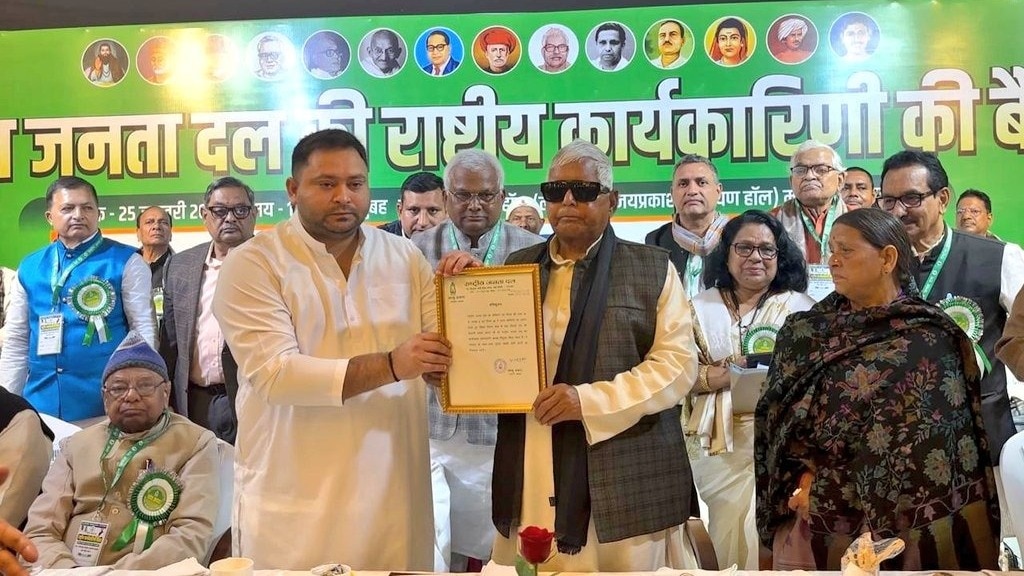
The appointment is also seen as a signal of generational transition: Tejashwi, already the party’s most prominent campaigner and the principal opposition face in Bihar, is expected to gain greater control over organisational decisions, internal coordination and political messaging.
Why the move matters now
The RJD has faced renewed questions about leadership clarity, succession and routine decision-making—especially as the party looks to rebuild momentum and sharpen strategy after recent electoral phases. By creating and filling a working president role, the party appears to be trying to reduce ambiguity about who steers daily operations while the top leadership retains its overarching authority.
Supporters within the party have framed the shift as a step toward stronger organisational discipline. Critics and sceptics, however, are likely to interpret it through the lens of dynastic politics—an old debate in Bihar’s political discourse that routinely resurfaces around leadership announcements.
What comes next for the RJD
The immediate test for the new arrangement will be whether the RJD can use the revised structure to improve booth-level organisation, candidate selection processes, alliance coordination and issue-based outreach. Party observers will also watch how responsibilities are divided between the working president, the state unit and the national leadership.
In the coming weeks, the party is expected to focus on organisational follow-through—appointments, committees and ground-level mobilisation—so that the change is seen as more than a symbolic elevation.