India and EU conclude free trade agreement talks after nearly two decades, commerce secretary says; legal review underway
India and the European Union have concluded negotiations on a comprehensive Free Trade Agreement after nearly 20 years of talks, Commerce Secretary Rajesh Agrawal said. The text is undergoing legal scrubbing, and the pact is expected to be signed later in 2026, with ratification steps on both sides before it can enter into force.
- Reporting desk
- Health India Network News Desk
- First published
India and the European Union have concluded negotiations for a comprehensive Free Trade Agreement (FTA) after nearly two decades of discussions, Commerce Secretary Rajesh Agrawal said on 26 January 2026. The deal is expected to expand two-way trade and investment and deepen economic integration between India and the EU, according to the official account provided to the media.
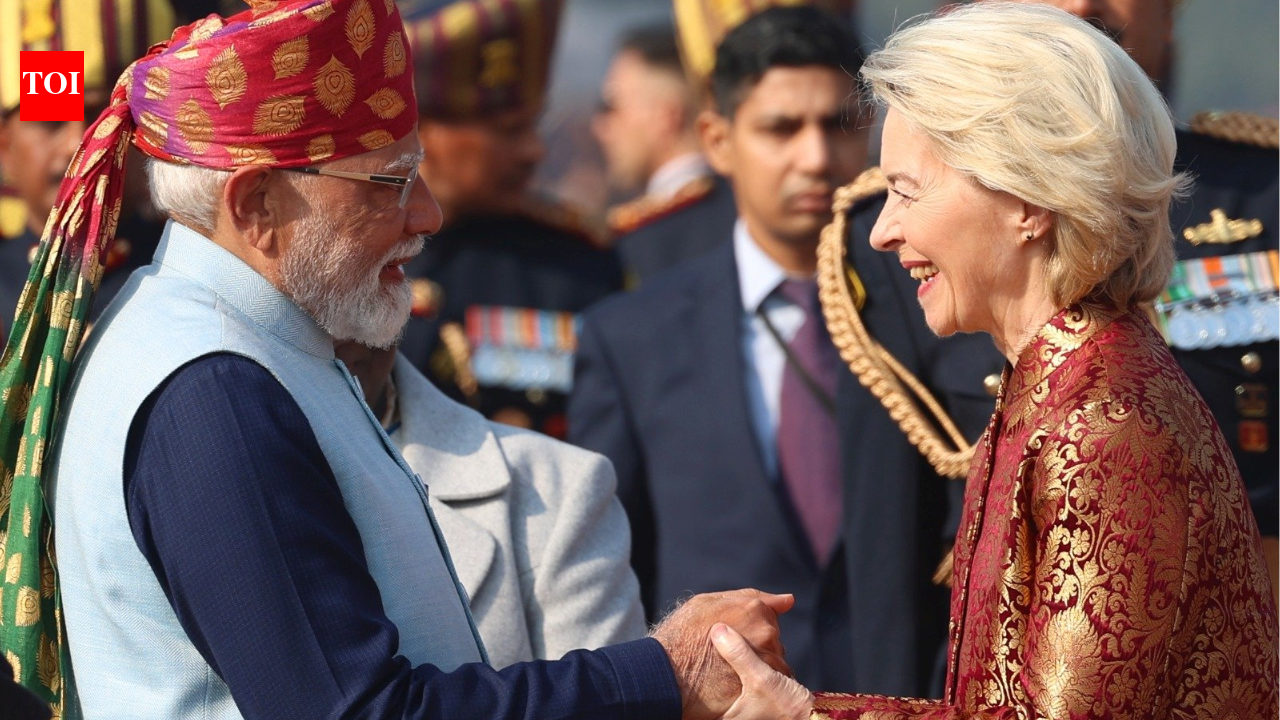
Agrawal said the agreement is now moving through legal scrubbing—a critical stage where the text is checked for consistency and drafting accuracy before final signature. While the conclusion of negotiations is a major milestone, the agreement still needs formal approvals: in India, Cabinet clearance; and in Europe, processes including ratification by the European Parliament, which can take time.
What the agreement covers and why it is significant
The FTA discussions began in 2007, making this one of India’s longest-running trade negotiations. The reported framework covers trade in goods, services and investment, alongside parallel tracks such as investment protection and Geographical Indications (GI). In scale and scope, it is positioned as a flagship agreement for both sides amid global trade uncertainty and shifting supply chains.
A key expectation is improved market access for Indian exports, particularly from labour-intensive sectors. These industries often compete globally on thin margins, where tariff cuts and simplified trade rules can materially change competitiveness. On the European side, the agreement is likely to be presented as a path to larger market access and clearer rules in one of the world’s fastest-growing large economies.
Timeline signals: signing later in 2026, entry into force after approvals
Agrawal indicated the pact is expected to be signed later in 2026. However, signing does not automatically mean implementation. Entry into force depends on domestic approval procedures in India and ratification steps in the EU. That lag is typical for large trade agreements, and it is where political constraints, sectoral lobbying and legal review can influence final timelines.
Market impact: why investors are watching closely
The conclusion of talks lands in a period when markets are highly sensitive to policy direction ahead of India’s Union Budget 2026–27 and amid global uncertainty. An FTA of this size can reshape sectoral prospects—export-heavy segments may anticipate improved access, while import-competing industries may push for safeguards and calibrated tariff phase-downs.
The next clear checkpoint is political: the formal announcement and the summit-level messaging around implementation. For companies, the most important details will be in tariff schedules, rules of origin, services commitments and dispute mechanisms—elements that determine whether the headline deal translates into real, predictable trade flows.